The flexible, open-source CMDB

Your CMDB.
Your data. Your model.

Authoritative and reference data, together. Define classes, choose schemas or stay schema-free, and connect your objects.
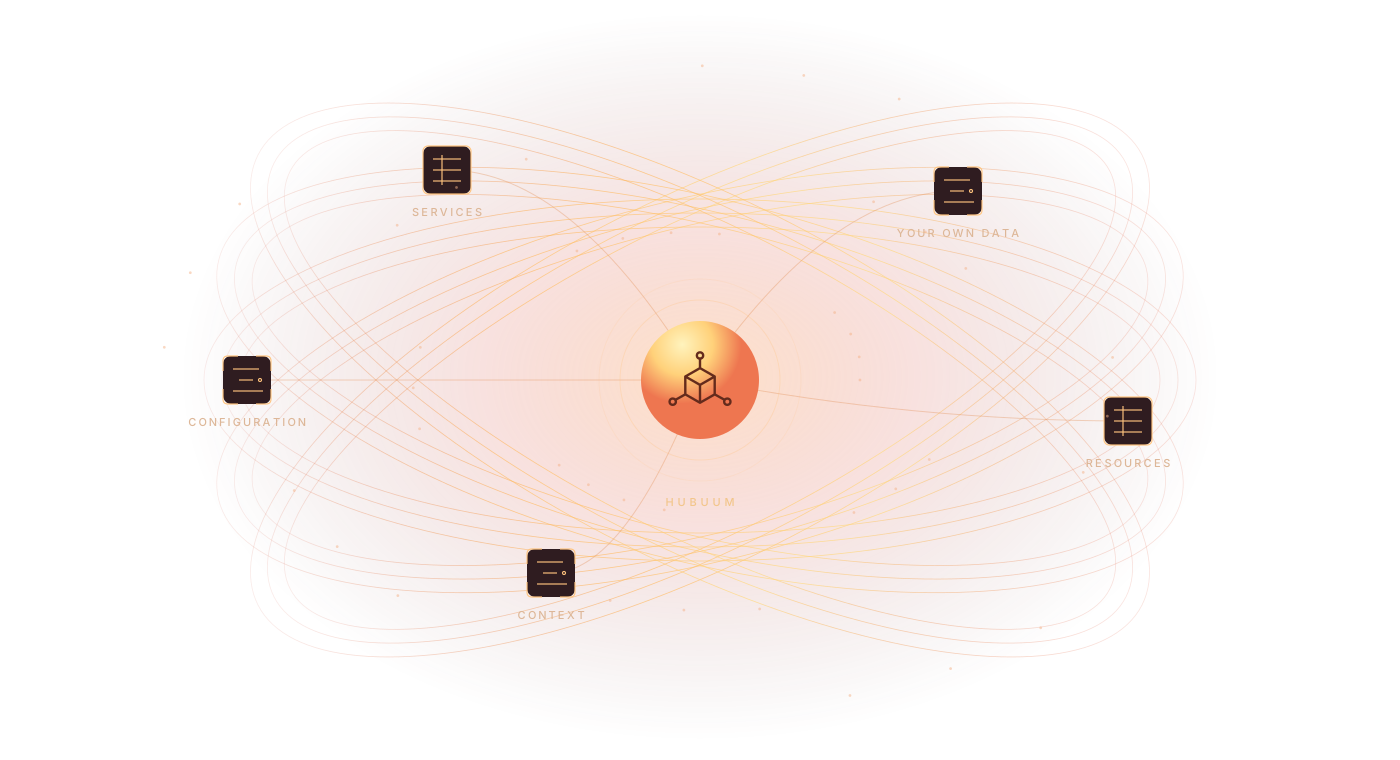
A luminous hub connects records from different sources. One CMDB at the centre of your world.
Your data. Other sources. One connected model.
Schema-bound or schema-free. Connected by design.Explore your CMDB

A place for the data
that matters.

Services, infrastructure, and the things only your organisation manages.

Hubuum is a configuration management database (CMDB) for your world. Define resource classes and store the JSON data that matters to you.

ServicesInfrastructureConfigurationOrganisational dataYour own concepts

Authoritative here.
Authoritative elsewhere.
Together in Hubuum.

One inventory for records you own and data whose authority stays elsewhere.

Data you maintain in Hubuum

Make it the source of truth.

Maintain your service catalogue, organisational data, or custom inventory directly in Hubuum.

Data you bring from other systems

Keep its authority upstream.

Bring in reference data without moving its source of truth. Your integrations collect and refresh it.

One CMDB. Both kinds of data.

Structure where you need it.
Freedom where you don’t.

Each class sets its objects’ schema policy: validate with JSON Schema, or leave the data schema-free.

Schema-bound

A shape you can rely on.

Validate with the JSON Schema standard.

Service / AtlasExample data
owner required string
Platform
tier integer · 1–3
1
availability number · 0–100%
99.9
enabled boolean
true
tags array of strings
["api", "public"]
support nested object
{"hours": "24/7"}
Schema-free

Room for what comes next.

Let JSON data evolve as your ideas take shape.

Context / Research notesExample data
{
  "purpose": "Explore new hosting",
  "questions": ["Capacity?", "Location?"],
  "candidate": true
}

Authority and structure are independent.
Either approach supports authoritative records and reference data.

Objects hold the facts.
Relationships provide
the context.

Connect objects across resource types,
sources, and schema choices.
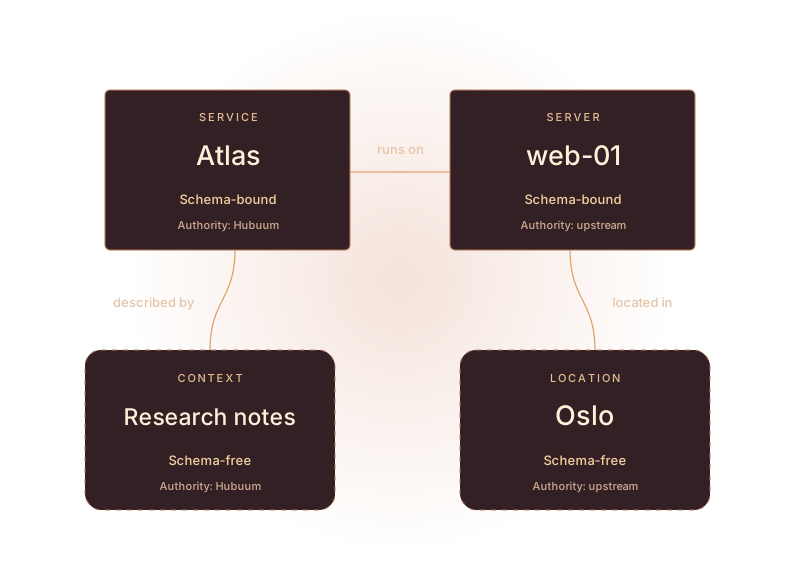
Example: schema-bound service Atlas, authoritative in Hubuum, runs on schema-bound server web-01 from an upstream source. Atlas is described by schema-free research notes owned in Hubuum. The server is located in Oslo, represented by schema-free reference data from upstream.Atlas inventory · a few connected objects
Your world. Your resource types.

Define the classes.
Shape your model.

Classes define your resource types: services, servers, or your own concepts. Choose a schema for each, or keep its objects schema-free.

ServiceSchema-bound catalogueServerSchema-bound inventoryContextFree-form notes
Different content. A common model.

A place for every
kind of resource.

Every object belongs to a class and holds JSON data under its schema policy. Atlas is a Service; web-01 is a Server.

ServiceAtlas · schema-boundContextResearch notes · schema-freeConnectionAtlas is described by the notes
Facts become context

Bring the objects
into relation.

Class relations connect resource types. Object relations connect instances: Atlas runs on web-01, which is located in Oslo.

ServiceAtlasRuns onweb-01Located inOslo
A shared model. Intentional access.

Give people the
access they need.

Organise resources in collections. Group permissions give people and service accounts the access they need.

OrganiseCollectionsPeopleUsers and groupsAutomationService accounts
Explore the server documentation

Open source. Self-hosted. Yours to shape.

Your data belongs.
Give it a model.